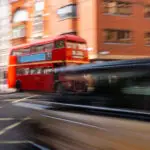

There is a specific kind of freedom that comes from deliberate limitation. In my early days, I, like many, carried heavy zooms that promised to “capture everything.” I soon realized that by trying to capture everything, I was seeing nothing. I was merely a spectator adjusting a ring, disconnected from the rhythm of the pavement beneath my feet.
Switching to a premium 35mm F1.4 lens changed my fundamental relationship with the urban environment. With a zoom, you are a passive observer; with a prime, you are a participant in the dance. I don’t “zoom in” on a shadow stretching across a Parisian alley; I walk toward it, feeling the temperature change and the sound of the city shift as I find the exact point of tension.
The 35mm is, for me, the focal length of the soul because it mirrors the natural field of human vision. It is broad enough to grasp the monumental, cold geometry of a skyscraper, yet intimate enough to isolate the fleeting silhouette of a lone passerby. This lens forces a “viscerally free tension” into the frame that no variable lens can replicate, as it requires a commitment to the subject.
Shooting with a prime lens is an exercise in mindfulness that strips away the technical noise. By removing the distraction of focal choice, my mind is liberated to focus on one thing only: the silent line where light meets concrete. It forces me to solve the puzzle of the composition with my body, moving back and forth until the geometry finally clicks into place.
In the streets of Paris or Bangkok, the 35mm acts as a bridge between the architect’s intent and the pedestrian’s reality. It doesn’t distort the world; it frames it with a surgical honesty that respects the proportions of the concrete. When I look through the viewfinder, I am not looking for a “shot,” but for an alignment of planes that only this specific focal length can reveal.
There is also a psychological advantage to the fixed lens that often goes unmentioned. Because I know exactly what my frame looks like before even raising the camera, I am faster and more discreet. I can wait for the perfect moment, positioned exactly where the light carves the building, without fumbling with a zoom ring that would break the spell of the instant.
Furthermore, the optical perfection of a prime lens like the 35mm G Master allows for a depth of field and a micro-contrast that zooms rarely achieve. In the world of Fine Art, these details matter. The way a shadow transitions into light or the sharpness of a distant window frame are the elements that give a print its three-dimensional, immersive quality.
Ultimately, the 35mm paradox is that by narrowing my options, it has widened my vision. It has taught me that the best photographs are not found by standing still and zooming, but by engaging with the space. It is this instinctive, physical dialogue with the street that allows The EyesWide Shooter to reveal the obvious invisible in the everyday chaos of our modern cities.